· Built around the Aircon running cost calculator
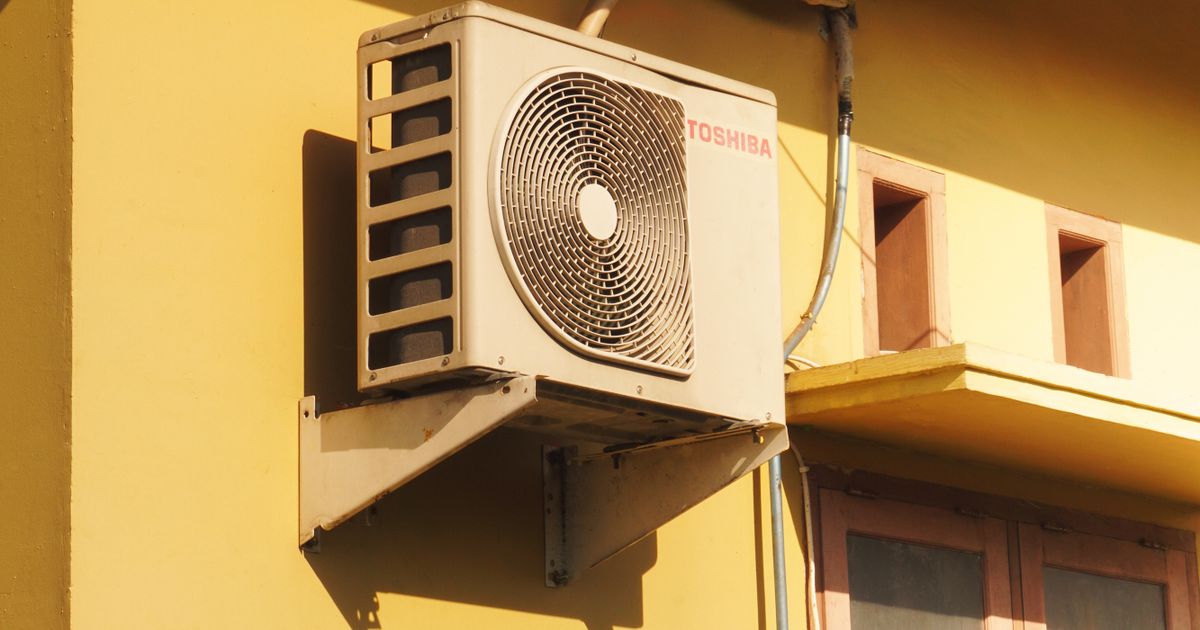 Photo: Pexels (free licence)
Aircon sizes in South African shops are given in BTU - 9 000, 12 000, 18 000, 24 000. That number tells you how much heat the unit can pull out of a room, not how much electricity it uses, and mixing the two up makes an aircon look ten times more expensive than it is. This post turns the BTU on the box into kilowatts and rands, using one rule and clearly labelled typical figures. The aircon running cost calculator does the same sums with your own numbers.
From BTU to the power it draws
Two steps, both plain physics:
- BTU/h to kW of cooling: divide by 3 412. One kilowatt is 3 412 BTU per hour, so 12 000 BTU/h is 3.52 kW of cooling.
- Cooling to electricity: divide by the COP. The coefficient of performance (COP, or EER on some labels) is how many units of heat the aircon moves for every unit of electricity it uses. An aircon is a heat pump, so it moves about three times more heat than the power it takes.
We use a typical COP of 3.2 for an inverter and 2.8 for a non-inverter split unit. These are illustrative figures, not measurements of any model - the label or manual of your unit will give its own, and the calculator lets you type it in. With them, 12 000 BTU/h is 3.52 / 3.2 = about 1.1 kW for an inverter, and 3.52 / 2.8 = about 1.26 kW for a non-inverter.
What each size costs to run
Every row below is the same sum: kW drawn x hours x R3.83 a kWh (City Power's 2026/27 middle prepaid block in Johannesburg, incl. VAT). A summer month is 6 hours a day for 30 days; a winter month is 2 hours of heating a day. The year counts 6 hours a day from October to March and 2 hours from April to September - 1 458 hours in all. These hours are an example, not a measured average.
| Size | Cooling kW | Inverter draws | Summer month | Winter month | A year |
|---|
| 9 000 BTU | 2.64 | 0.82 kW | R568.27 | R189.42 | R4 602.99 |
| 12 000 BTU | 3.52 | 1.10 kW | R757.69 | R252.56 | R6 137.32 |
| 18 000 BTU | 5.28 | 1.65 kW | R1 136.54 | R378.85 | R9 205.98 |
| 24 000 BTU | 7.03 | 2.20 kW | R1 515.39 | R505.13 | R12 274.63 |
- Hours here mean hours at full power. An aircon on a thermostat cycles, and an inverter slows down once the room is cool, so the hours it draws full power are often fewer than the hours it is switched on.
- Your price matters as much as the size. Eskom-direct customers and other municipalities pay different rates - the figure on your token slip or bill is the one to use.
Inverter or non-inverter?
At COP 3.2 against 2.8 an inverter uses 12.5% less electricity for the same hours. On the 12 000 BTU example that is 1 602 kWh against 1 831 kWh a year - R876.76 a year less. If the inverter model costs R3 000 more, it pays that back in about 3.4 years; for a 24 000 BTU unit used the same hours the saving is R1 753.52 a year and the payback about 1.7 years.
That is the conservative case. It counts only the difference in rated efficiency. An inverter also avoids switching its compressor fully on and off, and runs at part speed most of the time, where it is usually more efficient still - so the real saving is generally larger than this. Type your own price difference into the calculator to see your payback.
Cheaper ways to keep cool
- Every hour less costs one hour less. At 1.1 kW and R3.83, each hour the 12 000 BTU unit does not run saves about R4.21.
- Size it to the room. A unit far too big for the room cycles on and off; one too small runs flat out for hours. Both waste power.
- A few degrees warmer on the setting means less heat to move. The less the gap between inside and outside, the less the compressor has to work.
- Clean the filters. A clogged filter cuts airflow, and the unit has to run longer for the same cooling.
For everything else in the house, the appliance running cost calculator works from any appliance's watts, and the heater running cost calculator shows why a resistance heater costs about three times more than an aircon on heat for the same warmth.
Calculators used in this post
← All posts · Open the Aircon running cost calculator