· Built around the Pool volume calculator
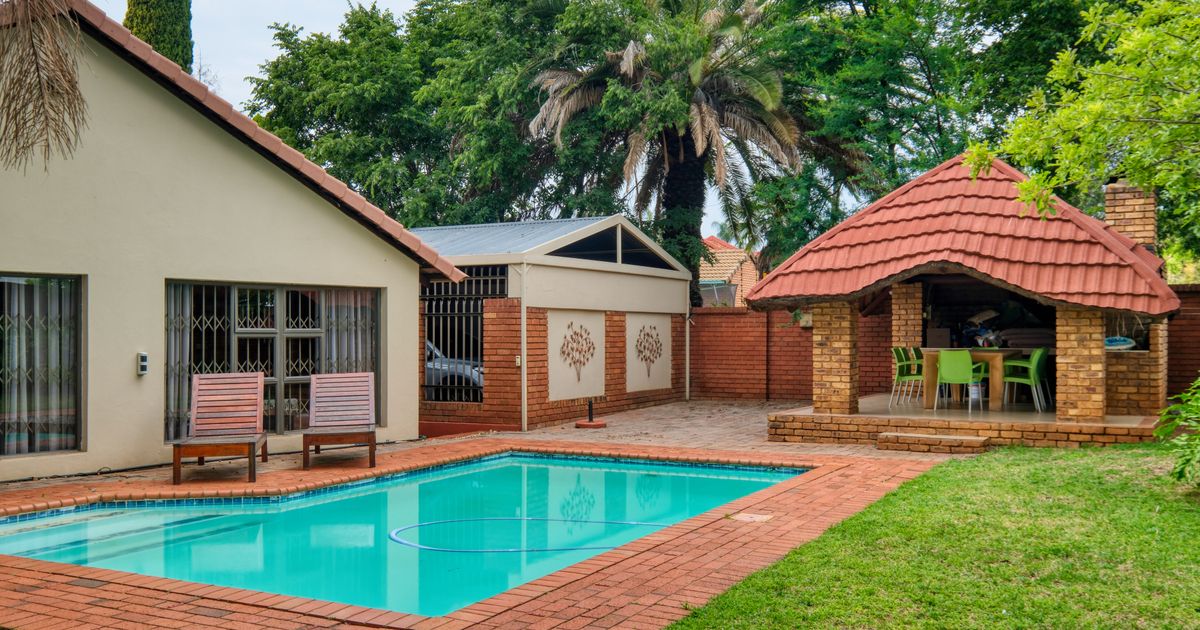 Photo: Alexander F. Ungerer on Pexels (free licence)
Late October is when South African pools come out of winter and most of the country's summer rain starts to fall. Three sums decide what that costs you: how many litres the pool holds, because every chemical dose and every top-up is measured against it; how much water your roof can harvest and what size tank is worth buying; and how to move between litres, kilolitres and the gallons on an imported pump or chlorinator. This post works each one through the pool volume, rainwater tank and unit converter calculators.
Run your own numbers
The pool calculator starts on the first example: a rectangular pool 8 m by 4 m, 1.1 m deep at the shallow end and 1.8 m at the deep end, filled by a hose running 20 litres a minute. Type your own measurements - of the water, not the walls.
Checked against a published example
Every calculator in this post was run on the inputs of a published worked example or official definition and gave the same answer:
- Pool: 8 m x 4 m, 1.1 m to 1.8 m deep gives an average depth of 1.45 m, 32 m² and 46 400 litres - the worked example in the calculate.co.nz pool volume calculator. Our pool calculator gives 46 400 litres.
- Rainwater: 16 mm of rain on 100 m² of tiled roof harvests 1 000 litres, and 11 mm on a metal roof does the same - Western Cape Government water leaflet, Harvesting of Rainwater. Our rainwater calculator gives 1 000 litres for 16 mm at 62.5% caught (tiles) and for 11 mm at 90.9% caught (metal).
- Units: a US gallon is exactly 3.785411784 litres and a UK gallon exactly 4.54609 litres - NIST Special Publication 811, Appendix B. Our unit converter uses those exact factors.
No calculator needed a fix for this post.
Worked example 1: how many litres your pool holds
- Volume = surface area x average depth, and 1 m³ is 1 000 litres (pool calculator).
- Average depth with an evenly sloping floor: (1.1 m + 1.8 m) / 2 = 1.45 m. A flat floor uses one depth.
- 8 m x 4 m = 32 m², x 1.45 m = 46.4 m³ = 46 400 litres.
- Each 1 cm the level drops is 320 litres (32 m² x 10 litres) - the number to watch for evaporation and splash-out.
- Filling from scratch with a 20 litre-a-minute hose takes 38.7 hours - 46 400 / 20 / 60. Time a 10 litre bucket to get your own flow.
- A round above-ground pool 4.5 m across and 1.2 m deep holds 19 085 litres: pi x 2.25² = 15.90 m², x 1.2 m. Each centimetre is 159 litres.
- Measure the water, not the pool shell - the water line usually sits 10 to 15 cm below the coping, and steps and a swim-out take a little off.
Worked example 2: dosing chemicals by the litre
- Pool chemical labels give doses per 10 000 litres (or per 50 000), so the volume from example 1 is the number to use.
- The 46 400 litre pool takes 4.64 times the per-10 000 litre dose - 46 400 / 10 000.
- Guessing 60 000 litres instead would overdose it by 29% - 60 000 / 46 400 = 1.29. Too much chlorine or acid costs money and can damage the pool surface.
- The round 19 085 litre pool takes 1.91 times the per-10 000 litre dose - less than half the rectangular pool's.
- Imported products sometimes dose per 10 000 US gallons, which is 37 854 litres - convert before you pour (unit converter).
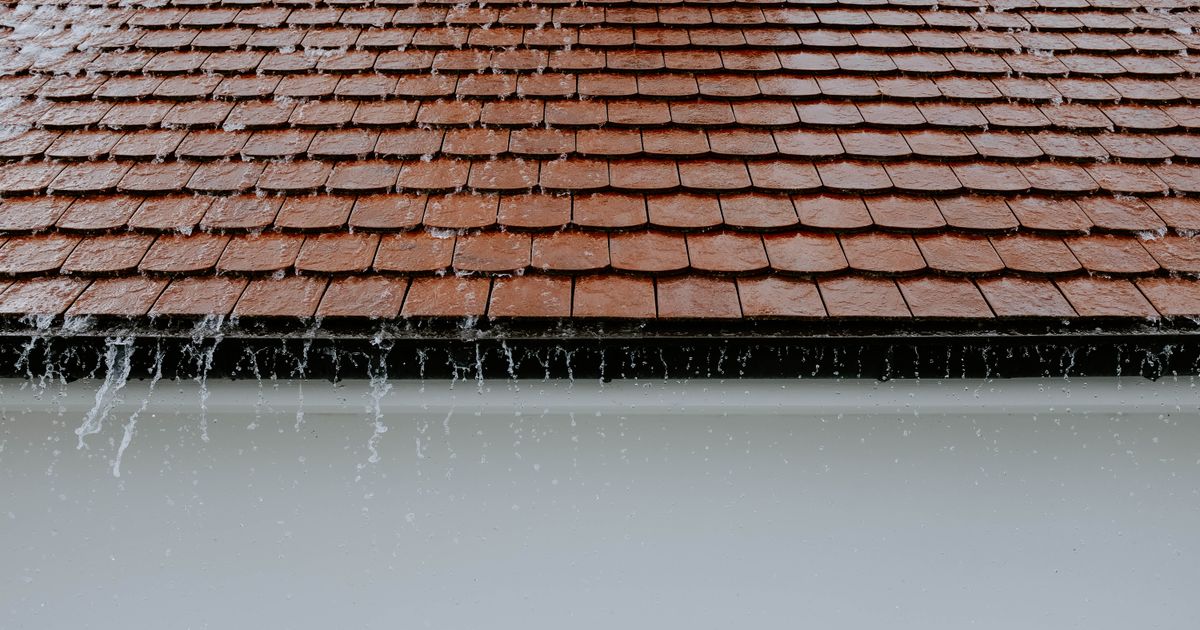 Photo: Adrien Olichon on Pexels (free licence)
Worked example 3: what your roof catches and what tank to buy
- 1 mm of rain on 1 m² of roof is exactly 1 litre - 0.001 m x 1 m² = 0.001 m³ (rainwater calculator).
- You never catch all of it: about 91% off a metal roof and 62.5% off tiles, going by the Western Cape Government figures above. The calculator's 80% is a middle guess.
- Use the roof's footprint, not the sloped surface - rain falls straight down, so a 150 m² house footprint is 150 m².
- 150 m² x 80% = 120 litres for every millimetre of rain. A 20 mm Highveld thunderstorm fills 2 400 litres.
- At 700 mm a year that is 84 000 litres, or 84 kl - 7 000 litres in an average month.
- Using 200 litres a day (garden, toilets, washing machine) is 6 083 litres a month, so the calculator suggests a 10 000 litre tank - the next common size above a month of your use.
- Summer rain falls in a few months, so a bigger tank carries more into winter in the summer-rainfall regions. The Western Cape is the other way round.
- Untreated rainwater is for the garden, toilets and washing, not drinking - the Western Cape leaflet advises against drinking it.
Worked example 4: topping the pool up from the tank
- The 8 x 4 m pool loses 320 litres for every centimetre - a 5 cm drop over a hot week is 1 600 litres.
- A 20 mm storm on a 100 m² roof at 80% caught is 1 600 litres - exactly that 5 cm top-up.
- A full 10 000 litre tank puts back 31 cm in the 8 x 4 m pool (10 000 / 320).
- Filling the whole pool from municipal water is 46.4 kl on your account - see the cost box below.
Worked example 5: litres, kilolitres and gallons
- 1 kilolitre = 1 m³ = 1 000 litres - the unit on every South African municipal water account (unit converter).
- The 46 400 litre pool is 12 257.58 US gallons (46 400 / 3.785411784) - the figure a US pump or chlorinator manual expects.
- In UK gallons it is 10 206.57 (46 400 / 4.54609). A UK gallon is about 20% bigger than a US one, so check which a label means.
- A 10 000 litre tank is 2 641.72 US gallons, and a 5 000 litre tank 1 320.9.
Not verified from a primary source: the cost of filling a pool uses the City of Johannesburg 2026/27 domestic water step tariff as reported from the City's tariff PDF - R64.53 a kl for 20 to 30 kl, R69.45 for 30 to 40 kl, R86.81 for 40 to 50 kl and R94.92 above 50 kl. Those table values could not be read from the PDF's text. On them, a household already using 20 kl that adds 46.4 kl for a pool pays about R3 765 more for the water alone, before sanitation. Your municipality's tariff and any water restrictions in force decide whether you may fill a pool from the mains at all - check them first. The 700 mm rainfall is an illustration - use your town's average from the SA Weather Service. The calculate.co.nz pool example is a calculator's own published example, not a South African standard.
What to do this month
- Measure the pool once and write the litres on the pump room door - every dose for the season depends on it (pool calculator).
- Size a tank before the main summer rains, from your roof footprint and your own use (rainwater calculator).
- Check your municipality's restrictions before filling a pool from the mains, and convert any gallon doses first (unit converter).
Sources
- Pool volume worked example (8 m x 4 m, 1.1 m to 1.8 m, 46 400 L): calculate.co.nz Pool Volume Calculator, read by CalcSA 16 October 2026.
- Western Cape Government, Harvesting of Rainwater (#THINKWATER leaflet, 2019): wcpp.gov.za, read 16 October 2026.
- US and UK gallon definitions: NIST Special Publication 811, Guide for the Use of the International System of Units, Appendix B: nist.gov, read 16 October 2026.
- City of Johannesburg, Water Tariffs 2026/27: joburg.org.za, read 16 October 2026 (rates not verified - see the note above).
Calculators used in this post
← All posts · Open the Pool volume calculator